Most people asking this question are actually asking two different questions without realizing it — and the answers are dramatically different.
Content weight capacity is the maximum weight of the items you put inside the box. A standard 32 ECT single-wall box holds up to 65 lbs of contents. This is what's printed on the Box Maker Certificate, and it is what most people mean when they ask how much a box can hold.
Stacking capacity (BCT) is the maximum compressive load from boxes stacked on top — how much weight the box can withstand from above before the walls buckle. A standard 32 ECT box typically has a Box Compression Test (BCT) strength of 500–700 lbs, depending on its dimensions. This is what warehouse operators need to know when building pallet stacks.
Before comparing machines, it helps to run the hand wrap math — because most operations significantly underestimate what hand wrapping costs them per pallet. The number feels invisible because it shows up as payroll, not as a line on the packaging budget.
At a $20/hour fully-loaded labor rate (base wage plus 30–40% for benefits and employer taxes, which is typical in US warehouse operations in 2026), every minute of labor costs $0.33. Hand-wrapping a standard pallet takes 3–4 minutes from film anchor to tail tuck. That is $1.00–$1.33 in labor per pallet — before you account for the film itself.
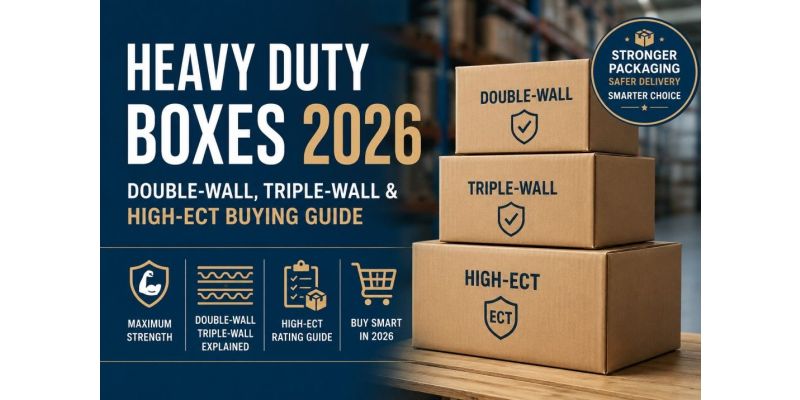
One crushed shipment can cost more than a year's worth of better boxes. Whether you're shipping automotive components, ceramic fixtures, or industrial machinery parts, the cardboard you choose is the last line of defense between your product and a damage claim. So let's cut through the confusion about wall counts, burst ratings, and ECT numbers, and help you pick the right box the first time.
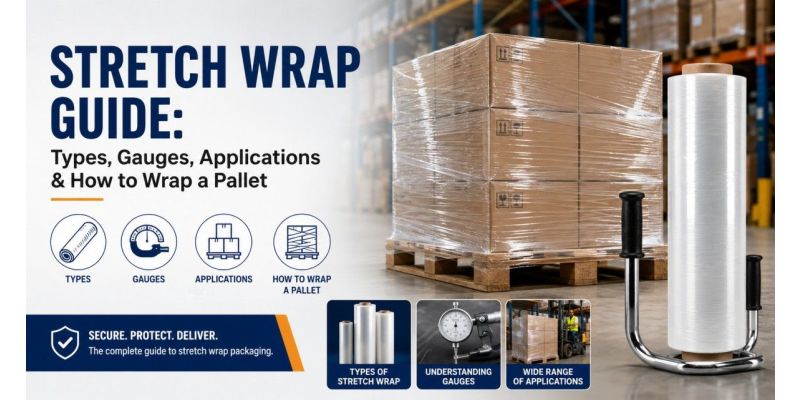
Stretch wrap (also called stretch film or pallet wrap) is a highly stretchable polyethylene plastic film stretched tightly around palletized loads, bundled items, or products to unitize them for storage and shipping. It comes in two main types, cast and blown, in hand wrap and machine wrap formats, and in gauges from 60G (light duty) to 150G+ (industrial). For most warehouse pallets, 80G cast hand stretch wrap is the industry standard starting point.
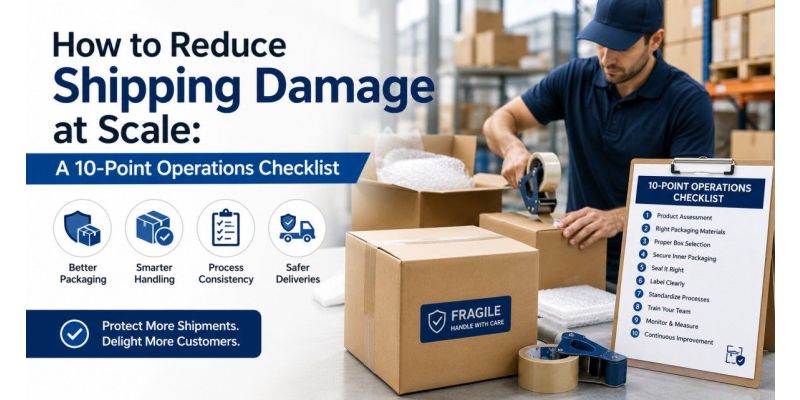
Shipping damage costs the average B2B operation $10–$20 per claim in operational overhead alone - before replacing the product. Industry benchmarks show 3–4% of parcel shipments and 2–5% of LTL freight arrive damaged. The 10-point checklist below covers the packaging spec changes, packing station protocols, and carrier tracking systems that consistently bring damage rates below 1% in high-volume operations.
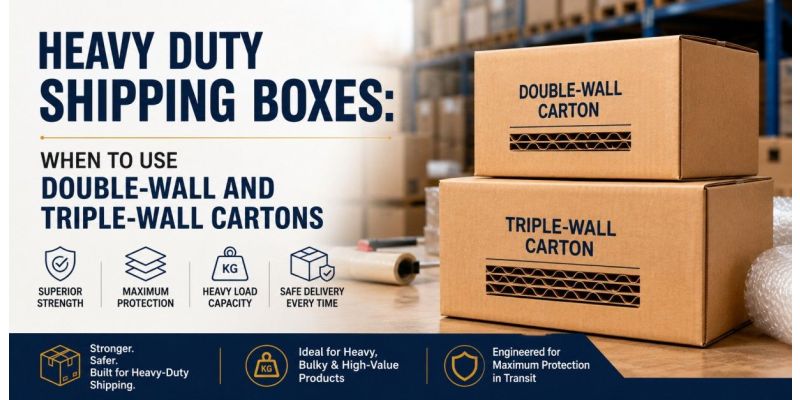
Heavy-duty shipping boxes are double-wall or triple-wall corrugated cartons rated at 275# burst strength or higher - built for products that exceed the safe capacity of standard 32 ECT single-wall boxes. Use double-wall for items 40–100+ lbs, rough freight handling, multi-transit shipments, and anything that will be stacked under other packages in a warehouse or truck. Triple-wall replaces wooden crates for loads exceeding 200 lbs. StarBoxes 275lb double-wall heavy-duty boxes are available in cube sizes from 8"×8"×8" up to 24"×24"×24".
Thanks for helping me understand that it will depend on your needs and requirements on what tape would be effective for your products. I can imagine how it would help as well when there are manual gummed packing tape dispensers to be used for the processes you have. It would be more convenient and...
I liked that you said that acrylic tape offers a longer life shelf and can improve seal over time. This is something that I will consider because I am planning to shop for a tape supply next weekend. What I want is to easily access the tape that I need when shipping boxes of goods to my relatives.





Recent comments