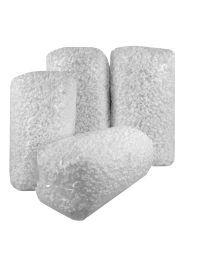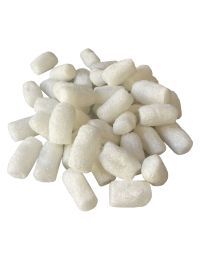


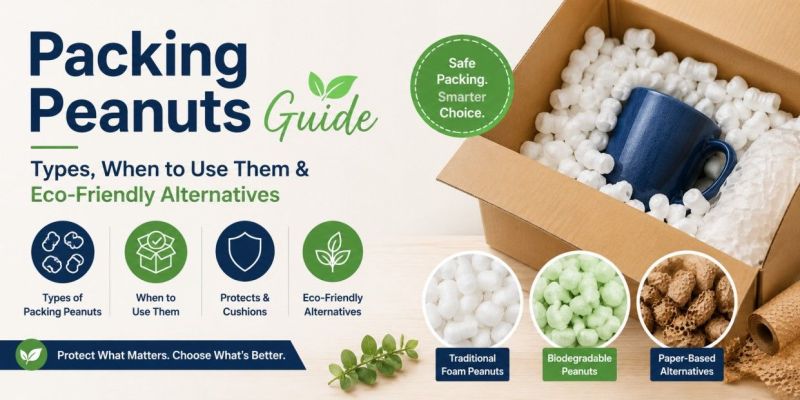
Packing peanuts are small, lightweight loose-fill cushioning materials used to protect fragile items during shipping. They come in three main types: traditional Styrofoam (polystyrene), anti-static pink Styrofoam for electronics, and biodegradable cornstarch peanuts. Each type protects packages differently and suits different products. Sold in bulk by the cubic foot, packing peanuts fill the void around items in a shipping box to prevent damage from movement and impact.
What Are Packing Peanuts?
Packing peanuts, also called foam peanuts, packing noodles, or loose-fill, are small S-shaped pieces of cushioning material that fill the empty space inside a shipping box. They were invented in 1962 by Robert E. Holden and patented by Tektronix Inc., then commercialized by Dow Chemical in 1965. For more than half a century, they've been the default protective packaging for anything fragile, oddly shaped, or expensive enough that damage in transit would be costly.
Their job is simple: keep the product from touching the walls of the box, absorb shock, and prevent items from shifting during transit. Because they're loose-fill, they conform to any shape which makes them especially useful for items that don't sit cleanly in a custom-cut foam insert or a flat bubble mailer. Think glassware, ceramics, electronics, antiques, holiday decorations, and oddly shaped collectibles.
At StarBoxes, we stock all three modern peanut types: regular Styrofoam, anti-static pink, and biodegradable cornstarch in bag sizes ranging from 3 cubic feet up to 14 cubic feet. The right choice depends on what you're shipping, how environmentally conscious your customers are, and how much you ship per month.
The 3 Types of Packing Peanuts
Packing peanuts come in three distinct varieties, each with its own material composition, cost profile, and ideal use case. Here's the side-by-side comparison.
|
Feature |
Regular (Styrofoam) |
Anti-Static (Pink) |
Biodegradable |
|
Material |
Expanded polystyrene |
Pink-tinted polystyrene |
Cornstarch or potato starch |
|
Color |
White |
Pink |
Off-white or beige |
|
Static charge |
Yes (high) |
No (treated) |
No (naturally) |
|
Water-soluble |
No |
No |
Yes (dissolves in seconds) |
|
Weight per cubic foot |
~0.4 lb |
~0.4 lb |
~0.5–0.8 lb |
|
Reusable |
Yes |
Yes |
Yes (if kept dry) |
|
Cost per cubic foot |
Lowest |
Mid |
Highest (~25–40% more) |
|
Best for |
General fragile items |
Electronics, circuit boards |
Eco-conscious brands |
|
Decomposition time |
500+ years |
500+ years |
Days to weeks in compost |
Regular Styrofoam Packing Peanuts
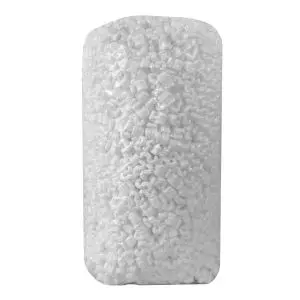
The classic white peanuts. Made from expanded polystyrene foam, they're the lightest and least expensive option per cubic foot. They generate static electricity when handled, which is why they cling to clothing, hands, and surfaces a small inconvenience for most products, but a real problem for sensitive electronics. They don't dissolve in water, don't break down in landfills for centuries, and aren't accepted in most curbside recycling programs (though many shipping stores like UPS Store and FedEx Office will take them back for reuse).
Anti-Static (Pink) Packing Peanuts
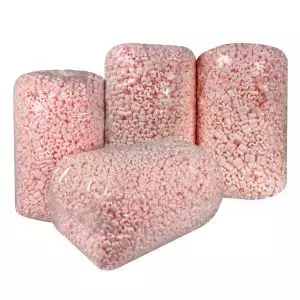
Pink peanuts look almost identical to regular Styrofoam but are treated to neutralize static electricity. The pink dye is itself the visual indicator that the static-dissipating treatment is present. They're the right choice anytime you're shipping electronics, circuit boards, hard drives, or any item where a static discharge could damage internal components. They cost slightly more than regular peanuts but only fractionally usually 5–15% more per cubic foot. Same disposal issues as regular Styrofoam.
Biodegradable Packing Peanuts
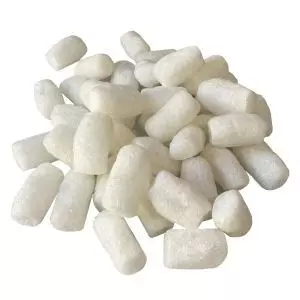
Made from cornstarch, potato starch, or wheat starch, biodegradable peanuts dissolve in water within seconds and decompose fully in days to weeks under compost conditions. They're naturally anti-static (no special treatment needed), which makes them a quiet upgrade over pink peanuts for electronics shippers who also want the eco angle. The trade-offs: they weigh roughly 50–100% more per cubic foot than Styrofoam, which adds slightly to shipping cost on outbound packages, and they break down if they get wet during transit. They cost 25–40% more upfront than regular peanuts.
When to Use Packing Peanuts vs. Other Void Fillers
Packing peanuts aren't always the right choice. They compete with bubble wrap, air pillows, packing paper, and foam-in-place systems and each has situations where it wins.
Reach for packing peanuts when:
- The item is oddly shaped or has multiple fragile protrusions (figurines, lamps, holiday decor)
- You need to fill a large void around a small item inside a too-big box
- You're shipping multiple small items together that need to be separated
- Storage cost matters more than packaging weight (peanuts compress in storage; air pillows take more space pre-inflation)
Reach for bubble wrap, foam wrap, or air pillows when:
- The item is flat and best protected by surface contact (electronics, framed art, screens); see our breakdown of bubble rolls vs foam wrap
- The recipient is likely to be frustrated by mess (peanuts are notorious for clinging to unboxing videos)
- You're shipping food-adjacent items where dust is unacceptable
- Brand presentation matters; peanuts read as utilitarian, not premium
In most shipping operations, you'll end up using both. Peanuts fill voids and stabilize position; bubble wrap or foam directly cushions the item itself. The two work as a system, not as alternatives.

Which Type of Packing Peanuts for Which Product?
Most articles stop at "here are the three types and their pros and cons." That's not a decision framework; it's a list. Here's what type of peanut to use based on what you actually ship.
Ship Electronics, Circuit Boards, or Anything with a Chip?
Anti-static pink peanuts or biodegradable peanuts. Both eliminate the static discharge risk. If your products are budget-priced and you ship high volume, pink is the workhorse. If your products are premium or your brand has an eco-conscious customer base (Patagonia-style audiences, sustainability-focused B2B buyers), biodegradable serves double duty as protection and as a brand signal.
Ship Glassware, Ceramics, or Antiques?
Regular Styrofoam or biodegradable. Static isn't a concern with ceramics or glass, so the pink anti-static premium isn't necessary. The decision is purely cost-vs-sustainability. For high-volume gift basket or wine shippers, regular Styrofoam keeps margins healthy. For boutique antique dealers shipping individual pieces with branded packaging, biodegradable signals care to the recipient.
Ship Cosmetics, Skincare, or Beauty Products?
Biodegradable, almost without exception. The customer base for beauty brands skews heavily toward sustainability-conscious buyers, and peanuts that dissolve in water reinforce that. The added cost per shipment is minimal, usually $0.50 to $1.00 per package, and it shows up as a perceived brand-value boost on social media unboxings.
Ship Holiday Decor, Crafts, or Bulky Lightweight Items?
Regular Styrofoam works fine. These items are usually low-cost; the recipient isn't expecting premium packaging, and the volume per package can be substantially bigger. Boxes need more cubic feet of peanuts, and the cost difference between Styrofoam and biodegradable scales linearly with volume. Save the biodegradable budget for the products where it actually moves the needle.
Ship to Customers Across Climate Zones?
Stick with Styrofoam (regular or anti-static). Biodegradable peanuts can soften if they pick up moisture during humid transit (Gulf Coast, Pacific Northwest in winter, summer storms). They're built to dissolve; that's the feature that can become a bug in unpredictable shipping conditions.
Eco-Friendly Alternatives to Traditional Packing Peanuts
If your goal is to phase out Styrofoam altogether, biodegradable peanuts are one option, but they're not the only one. Several alternative void-fill formats can replace peanuts entirely:
Crinkled Kraft Paper
Recycled, recyclable, and compostable. Available in rolls and dispensers, crinkled kraft paper fills voids effectively for moderately fragile items. It costs more per cubic foot than peanuts but reads as premium in unboxing, a real consideration for brand-focused shippers. The downside is that paper compresses over time, so heavier items inside the box can settle and lose their protective buffer during long-haul shipping.
Air Pillows

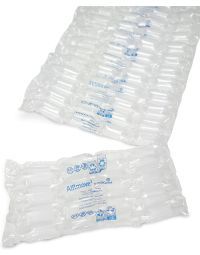
Lightweight inflated plastic pillows that take up minimal storage space pre-inflation. They're recyclable through plastic film recycling streams (the same as grocery bag drop-off bins), but not biodegradable. Inflated air pillows are popular with high-volume warehouses that have invested in inflation machines; once the machine cost is amortized, the per-package cost beats peanuts on labor (faster to pack). They don't conform to shape the way peanuts do, so they're less effective for oddly shaped items.
Recycled Bubble Wrap
Made from recycled plastic, bubble wrap works as both a wrap and a void filler. It's not the most eco-friendly option in absolute terms, but using recycled bubble wrap closes the loop. Customers can drop it off at plastic film recycling sites along with grocery bags. Best for flat or wrap-around protection, not pure void fill.
Mushroom-Based Packaging (Mycelium)
A newer option, mushroom-based packaging is grown from mycelium (fungal root structures) bonded to agricultural waste. It's fully compostable and naturally fire-retardant. The catch: it's molded to specific shapes rather than loose-fill, so it works for custom packaging molds (think a packaging insert for a specific product) rather than as a peanut alternative. Costs are still significantly higher than other options.
For most StarBoxes customers, the practical path forward is mixing peanut types by SKU: biodegradable for high-margin and brand-sensitive items, regular Styrofoam for high-volume low-margin items. We cover the trade-offs and disposal options in detail in our separate post on how to dispose of biodegradable packing peanuts.
How to Use Packing Peanuts Correctly
Using peanuts well takes more thought than just dumping them in the box. Five steps separate effective protection from packing theater:
- Start with a base layer. Pour 2–3 inches of peanuts into the bottom of the box before placing the item. This creates a shock-absorbing platform.
- Wrap the item first. Peanuts surround and stabilize, but they don't directly cushion. Wrap fragile items in bubble roll or foam before placing them in the peanut bed.
- Center the item. Place the wrapped item in the middle of the box, never against the walls. The peanut layer between item and wall is what absorbs impact.
- Fill all voids fully. Pour peanuts around the item until they reach the top of the box, then gently shake and add more. Underfilling lets the item shift during transit, which defeats the entire system.
- Press down before sealing. Apply gentle pressure on the lid before taping. The peanuts should compress slightly without crushing; that's the indicator that the box is full enough to stay stable during handling.
Common mistake: skipping the wrap step. Peanuts alone don't protect against direct impact; they protect against shifting. A glass vase wrapped only in peanuts will still break if the box is dropped on a hard surface. Peanuts are the second line of defense, not the first.
How Much Do You Need? Estimating Cubic Feet
Packing peanuts are sold by volume most commonly in 3, 7, 12, and 14 cubic foot bags. Here's how to estimate what you actually need.
Calculate the volume of your box in cubic feet by multiplying length × width × height in inches, then dividing by 1,728. For example, a 12″ × 12″ × 12″ box is 1 cubic foot. A 24″ × 18″ × 18″ moving box is roughly 4.5 cubic feet.
Subtract the volume of the items going inside (roughly), and that's the volume of peanuts you need per package. For most everyday shipping operations:
- A 3 cubic foot bag fills roughly 6–10 small e-commerce boxes (10″ x 10″ x 10″ or smaller)
- A 7 cubic foot bag handles 15–25 mid-size packages
- A 12–14 cubic foot bag is the right starter quantity for a small business shipping 50+ packages per month
If you ship more than 200 packages a month, the cost-per-cubic-foot drops significantly when buying by the case or pallet. A custom bulk quote is the path forward; reach out to discuss pricing for high-volume operations.
Disposal & Reuse: What to Do With Peanuts After Shipping
Your customers will eventually have a box full of peanuts they didn't ask for. Help them dispose of them responsibly, and your brand gets credit for the entire packaging system, not just the product inside.
Reuse First
All three peanut types are reusable as long as they stay dry and don't break down too much. The same peanuts can protect 4–5 outbound shipments before they start losing structure. Encourage customers to save them for their own outgoing packages.
Recycle Styrofoam Peanuts
Curbside recycling almost never accepts Styrofoam peanuts. The right disposal channels are: drop them at a participating UPS Store or FedEx Office for reuse, find a local foam recycling center via earth911.com, or mail them back to a Plastic Loose Fill Council member for repurposing.
Dispose of Biodegradable Peanuts
Biodegradable peanuts can be dissolved under warm running water, added to home or commercial compost, or buried in a garden bed where they'll break down within days. They're nontoxic to people and pets but not produced under food-safe conditions, so don't eat them.
We covered the full disposal workflow in detail in our guide to how to dispose of biodegradable packing peanuts, including which retailers participate in foam takeback programs and which composting setups handle peanuts best.
Frequently Asked Questions
1. Are packing peanuts recyclable?
Biodegradable cornstarch peanuts are compostable and dissolve in water within seconds. Styrofoam (polystyrene) peanuts are technically recyclable but are not accepted in most curbside programs. Drop them off at participating UPS Stores, FedEx Office locations, or specialized foam recycling centers. Many shipping stores accept them for reuse.
2. What is the difference between pink and white packing peanuts?
Pink packing peanuts are treated to dissipate static electricity, making them safe for shipping electronics, circuit boards, and other static-sensitive items. White packing peanuts are standard polystyrene without anti-static treatment and will conduct static charge. Both are made from the same base material; the pink dye signals the treatment.
3. Are biodegradable packing peanuts as protective as Styrofoam?
Yes, biodegradable peanuts offer comparable cushioning and void-fill performance to Styrofoam. They are slightly heavier per cubic foot (which can marginally increase shipping costs) and can break down if they get wet during transit. For most product categories, the protection difference is negligible.
4. How much packing peanuts do I need for a moving box?
A standard medium moving box (3 cubic feet) requires roughly 2 to 2.5 cubic feet of packing peanuts to fill voids around packed items, depending on what's inside. A 7 cubic foot bag covers 3–4 medium boxes. For shipping smaller e-commerce packages, a 3 cubic foot bag fills 6–10 boxes.
5. Can you use packing peanuts for electronics?
Use anti-static (pink) packing peanuts or biodegradable peanuts for electronics, never regular white Styrofoam peanuts. Regular peanuts generate static electricity that can damage circuit boards, hard drives, and other sensitive components. Anti-static and biodegradable peanuts both eliminate this risk.
6. Where can I buy packing peanuts in bulk?
StarBoxes carries all three types of packing peanuts regular Styrofoam, anti-static pink, and biodegradable in bag sizes from 3 cubic feet up to 14 cubic feet at wholesale pricing.
Choosing the Right Packing Peanuts for Your Shipping Needs
The right packing peanut depends on three things: what you ship, who your customer is, and how much volume you move. Regular Styrofoam wins on cost. Anti-static pink wins on electronics safety. Biodegradable wins on sustainability and customer perception. Most shipping operations end up running two types in parallel one for high-volume utilitarian shipments, one for brand-sensitive premium items.
StarBoxes stocks all three types in cubic foot sizes from 3 to 14, with bulk pricing for high-volume operations.
Ready to stock up? Shop our complete packing peanuts collection or request a custom bulk quote for orders over 50 cubic feet per month.